DHA is one of the brain's main structural fats — which is why omega-3 comes up so often in conversations about memory, mood and healthy ageing. Here's what the research supports, and where it's still uncertain.
DHA is built into the brain
DHA makes up a large share of the fats in brain cell membranes and in the retina. It's laid down rapidly in early life and remains a key structural component throughout adulthood. That structural role is the biological reason omega-3 status is of interest for brain health across the lifespan.
Cognition and ageing
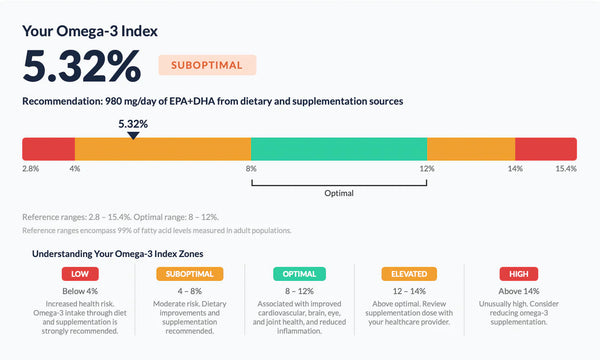
Observational research has linked a higher Omega-3 Index with better markers of cognitive health and, in some studies, with brain-volume measures in later life. The picture from intervention trials is more mixed and depends on the population, dose and starting level — which, again, is why baseline status matters.
Mood
Meta-analyses of omega-3 and depression have tended to favour EPA-dominant formulas, though the evidence is mixed and omega-3 is not a treatment. If you're managing your mental health, that's a conversation for your GP, not a supplement aisle.
This is general information, not medical advice.
Where do you actually stand?
See our tests →Know your number.
A simple at-home finger-prick test, posted to your door. Find out where you actually stand on omega-3.
See our tests