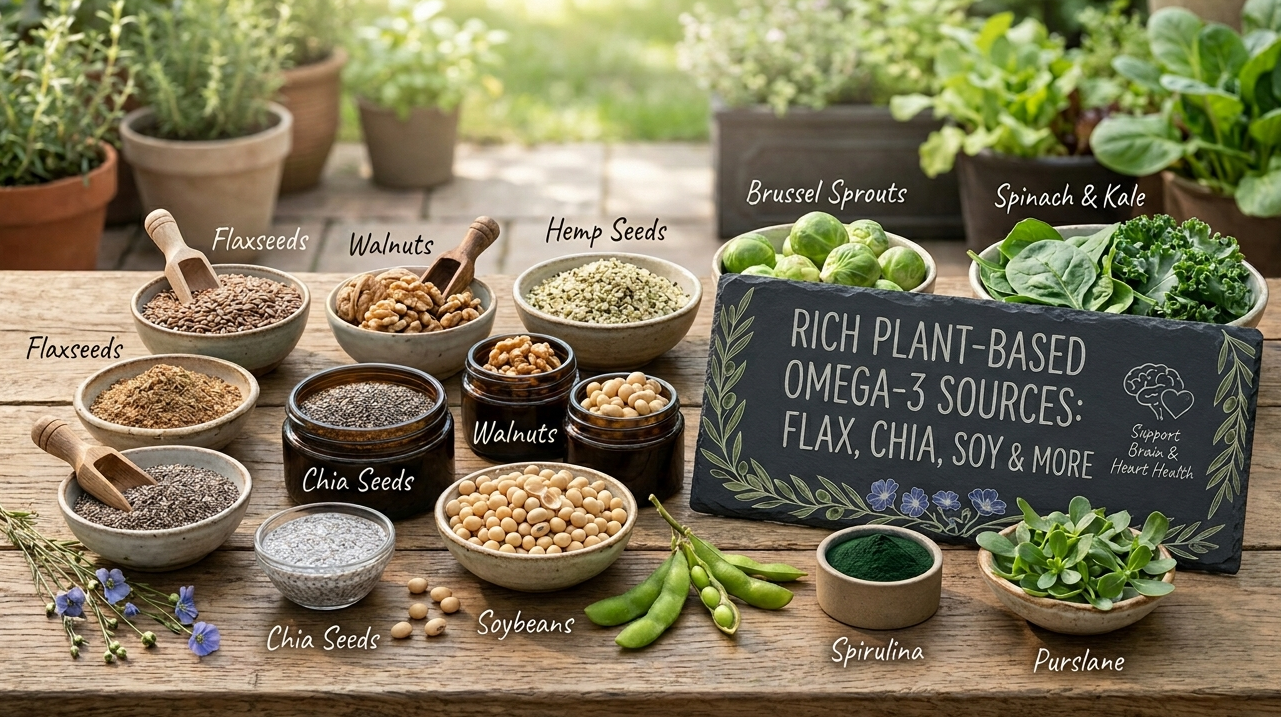
Flax, chia and walnuts are often called “omega-3 foods” — and they are. But the omega-3 they provide isn't the same kind your body uses in the Omega-3 Index, and the gap between the two trips up a lot of well-intentioned plant-based eaters. The good news: you can absolutely get enough without fish. Here's how.
ALA is not EPA or DHA
Plant foods provide ALA (alpha-linolenic acid), a short-chain omega-3. The two long-chain omega-3s that matter for your Omega-3 Index are EPA and DHA, found mainly in oily fish — and, originally, in the microalgae fish eat. Your body can convert ALA into EPA and DHA, but only a small fraction makes the journey.
Why conversion is limited
Studies consistently show that conversion of ALA to EPA is modest, and conversion to DHA is very low — often only a few per cent. That's why people who rely on flax or chia alone can still have a low Omega-3 Index despite what looks like a healthy diet on paper. Eating more ALA helps a little, but it doesn't reliably close the gap.
Algae oil: the direct route
The good news for vegans and vegetarians is algae-based omega-3. Microalgae are where fish get their EPA and DHA in the first place, so algae oil supplies these long-chain omega-3s directly — no conversion needed. The DHA (and, in some products, EPA) from algae is molecule-for-molecule identical to the kind from fish. It's the most reliable way for a plant-based eater to reach and hold a healthy Index.
How to choose and dose an algae supplement
Look for the combined EPA + DHA figure on the supplement facts, not just the oil weight, and pick a dose suited to your starting point — our supplement guide covers what to look for, and how much EPA and DHA helps you set a target. Keep ALA-rich foods (flax, chia, walnuts) in your diet too; they contribute, just not enough on their own.
Pregnancy and specific needs
Algae DHA is particularly useful in pregnancy for anyone not eating fish, since DHA is the omega-3 the baby uses most. As always, check any supplement with your midwife or GP.
How to know it's working
Because plant-based routes depend so heavily on conversion and dose, testing is especially valuable here. Measure your Omega-3 Index, adjust your algae intake if needed, and retest after three to four months to confirm you've reached the optimal band.
Frequently asked questions
Can vegans get enough omega-3?
Yes — most reliably with an algae-based EPA/DHA supplement, since plant ALA from flax and chia converts poorly to the long-chain forms.
Is flaxseed enough for omega-3?
Usually not on its own. Flax provides ALA, only a small fraction of which becomes EPA and very little DHA.
Is algae omega-3 as good as fish oil?
For DHA (and EPA in some products) it provides the same molecules directly, without conversion — so it's an effective fish-free source.
How do I know my level is high enough?
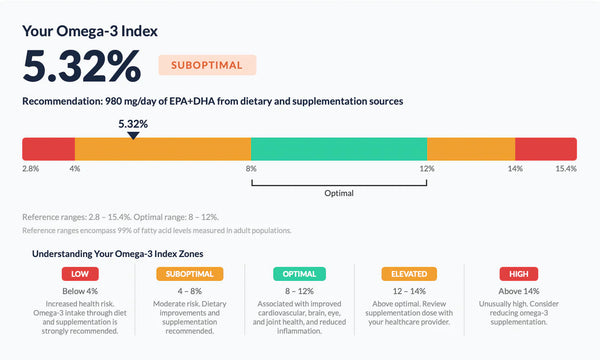
Test your Omega-3 Index; aim for the 8–12% optimal range and retest after a few months to confirm.
Vegan or not, your number is your number.
Check your Omega-3 Index →References
- Reviews of ALA-to-EPA/DHA conversion efficiency in humans (conversion to EPA modest; to DHA very low).
- Harris WS, von Schacky C. The Omega-3 Index: a new risk factor for death from coronary heart disease? Preventive Medicine. 2004;39(1):212–220.
This article is general information, not medical advice, and the test is not a diagnostic test. Always discuss significant health decisions, or any changes to supplements, with your GP.
Know your number.
A simple at-home finger-prick test, posted to your door. Find out where you actually stand on omega-3.
See our tests