Alongside your Omega-3 Index, some test reports show an omega-6 to omega-3 ratio. It's one of the more misunderstood numbers in nutrition — surrounded by both hype and dismissal — so here's what it actually means and how much to read into it.
What the ratio measures
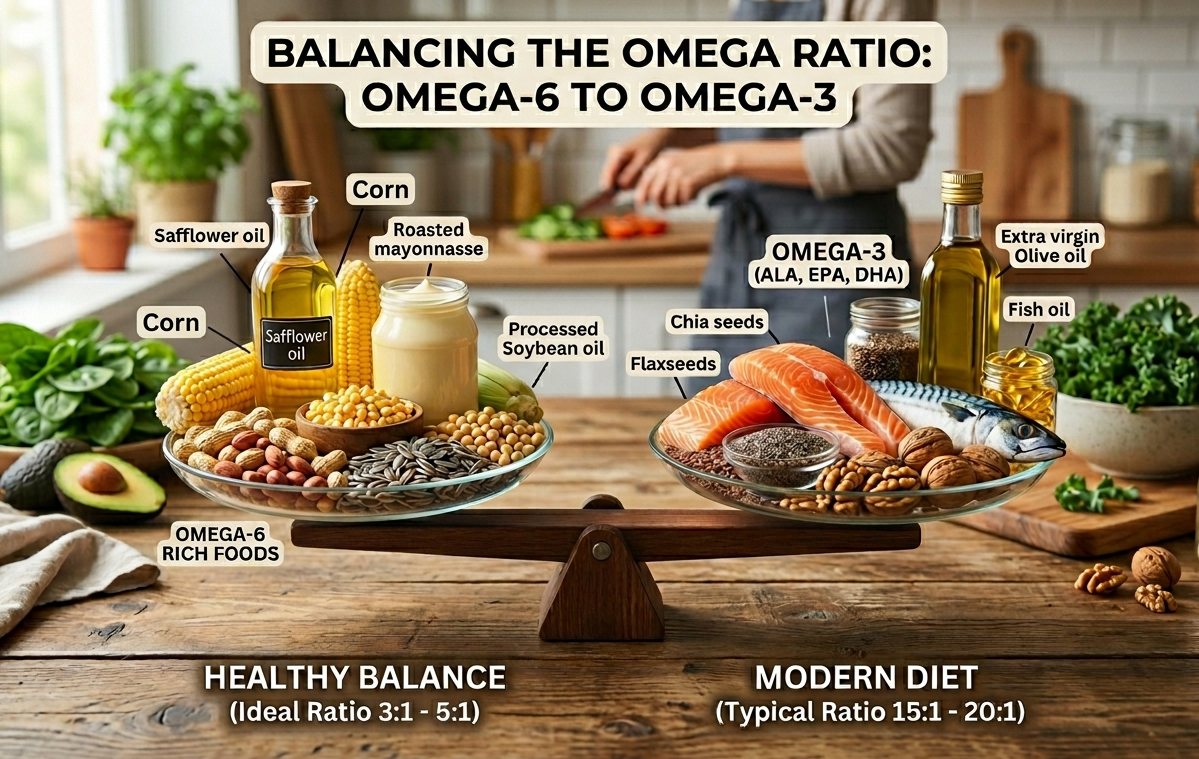
Omega-6 and omega-3 are both essential fats, and both are necessary for health. The ratio simply compares how much omega-6 you carry relative to omega-3. Because the two families compete for some of the same enzymes and pathways in the body, their balance — not just the amount of each — is of interest to researchers.
Why the modern diet shifted it
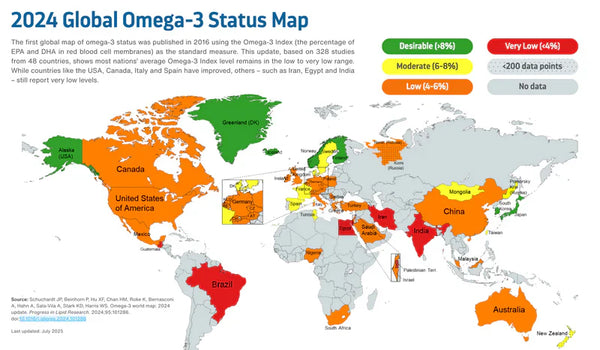
Over the last century, Western diets have become much higher in omega-6 — largely from vegetable and seed oils in processed and fried foods — while omega-3 intake from oily fish has stayed low. The result is that many people sit at a far higher omega-6:omega-3 ratio than their ancestors did. In the UK, where omega-3 status is already low, the imbalance is common.
Raising omega-3 is the main lever
The most practical way to improve the ratio isn't to fear omega-6 — it's still essential — but to bring omega-3 up. As your EPA and DHA rise, your Omega-3 Index improves and the ratio narrows at the same time. The two numbers move together, which is why chasing the ratio in isolation rarely makes sense.
Which number should you watch?
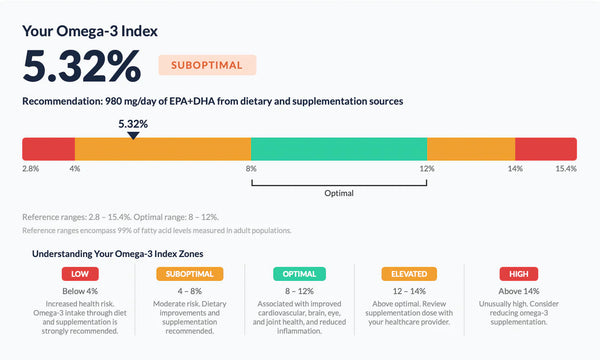
The Omega-3 Index is the better-validated, more reproducible marker, so it's the one to lead with. Treat the ratio as useful supporting context: a higher Index will generally pull the ratio in the right direction. Our guide on how to read your result shows how the two sit together.
Seeing it on your report
Not every test reports the ratio. The Omega-3 Plus Ratios and Complete tests include the omega-6:omega-3 ratio (and the AA:EPA inflammatory-balance ratio), while the basic test focuses on the Index alone. If the balance of your fats is something you specifically want to track, those are the tests that show it.
Frequently asked questions
What is a good omega-6 to omega-3 ratio?
There's no single agreed cut-off, and the Omega-3 Index is the better-validated marker. Lower (more balanced) is generally considered preferable, and raising omega-3 moves you there.
Should I cut omega-6 to fix my ratio?
Usually not the priority — omega-6 is essential. Raising omega-3 is the more effective and sensible lever.
Is the ratio better than the Omega-3 Index?
No. The Index is more reproducible and better validated. Use the ratio as supporting context.
Which test shows the ratio?
The Omega-3 Plus Ratios and Complete tests; the basic test reports the Index only.
See both your Index and your ratio.
Omega-3 Plus Ratios →References
- Harris WS, von Schacky C. The Omega-3 Index: a new risk factor for death from coronary heart disease? Preventive Medicine. 2004;39(1):212–220.
- Stark KD, et al. Global survey of the omega-3 fatty acids in healthy adults. Progress in Lipid Research. 2016;63:132–152.
This article is general information, not medical advice, and the test is not a diagnostic test. Always discuss significant health decisions with your GP.
Know your number.
A simple at-home finger-prick test, posted to your door. Find out where you actually stand on omega-3.
See our tests